Beach volleyball needs less kit than almost any other sport: no shoes, no pads, no racket. But exactly one item decides whether the game is fun or painful – and most beginners have the wrong one.
The ball is the only purchase that matters
An indoor ball in sand is not “fine too”. It is a different piece of equipment. The official specifications make the difference clear:
Beach ball: circumference 66 to 68 centimetres, weight 260 to 280 grams, internal pressure 171 to 221 millibars.
Indoor ball: circumference 65 to 67 centimetres, same weight, internal pressure 294 to 318 millibars.
Same weight, marginally larger – but only about two thirds of the pressure. A beach ball is noticeably softer. That is not a detail but the reason your forearms are not red after two hours of digging, and the reason a clean hand set is possible at all. With a hard indoor ball in sand, passing hurts and the ball jumps out of your fingers.
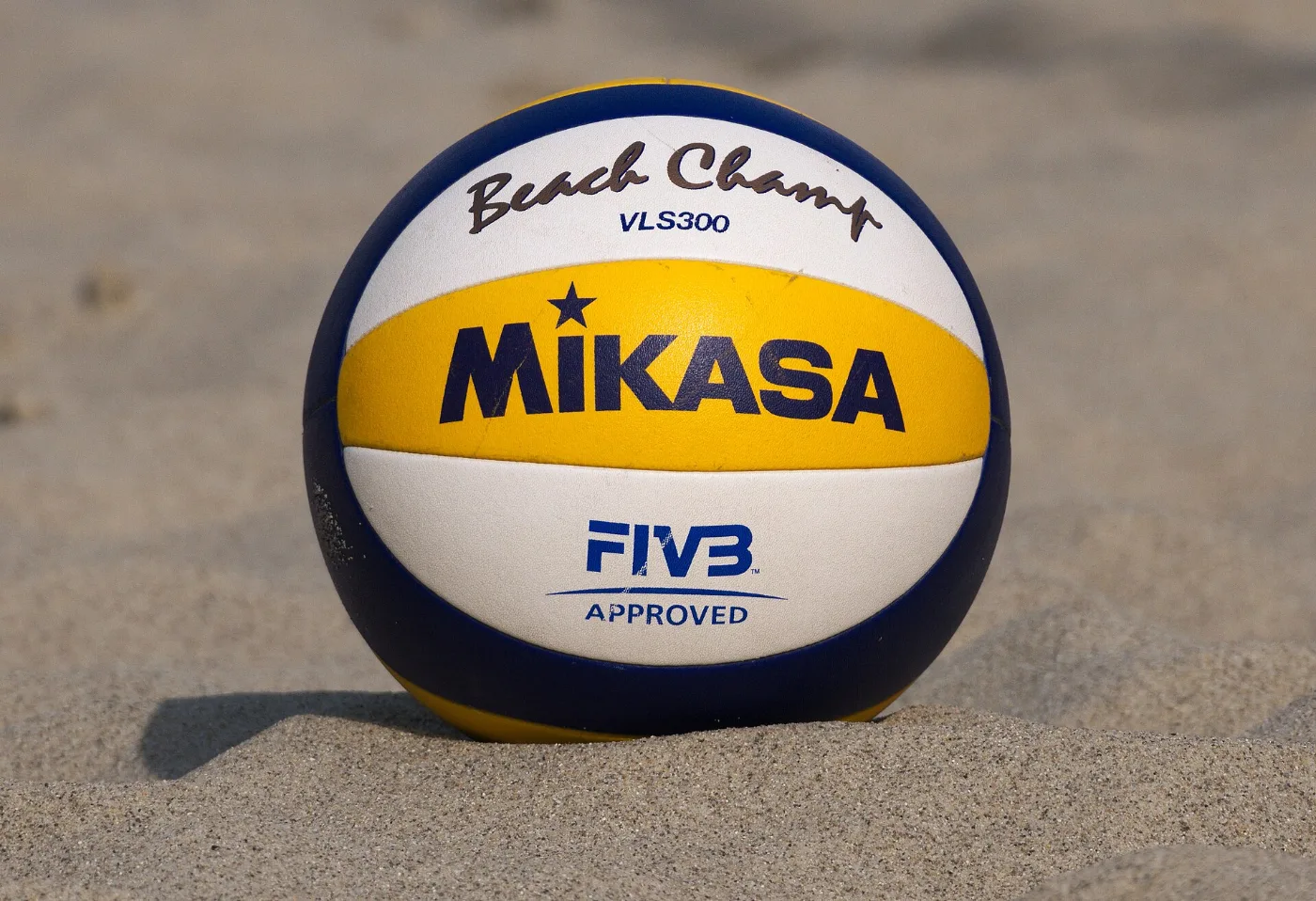
There are two construction differences you cannot see in photos: the surface is rougher, so the ball does not slip out of damp or sandy hands. And on good balls the panels are stitched rather than glued, because glued seams come apart in wet and heat.
How to recognise a usable ball: you can visibly press it in with your thumb. If it feels like an indoor ball it is over-inflated – fixable with a needle and a little patience. An over-hard ball is the most common reason beginners give up on hand setting.
What else you actually need
Water, more than you think. In sand you lose around two litres an hour. Everything on that is in our article on drinking and sun protection.
Sunscreen from factor 30, water resistant, and a cap. Light sand reflects additional UV radiation from below.
A towel. Not for drying off but for getting the sand off your hands – wet, sandy fingers are the enemy of every set.
That was the compulsory part. Everything else is comfort.
Sand socks: when they pay off
Thin, close-fitting socks made of neoprene or lycra. They are not a beginner’s gadget but solve three concrete problems:
Hot sand. From about 30 degrees air temperature the surface gets so hot in high summer that barefoot play becomes unpleasant or impossible.
Cold sand. In Berlin the more relevant case. From October onwards and in unheated halls they are the difference between playing and freezing.
Blisters and calluses. Anyone standing in sand for a whole weekend for the first time gets them reliably – especially on the toes.
For two summer hours you do not need them. For a camp in October you do.
Sunglasses: the underrated item
Not for looks. On an outdoor court you look upwards on every serve, often straight towards the sun, and the sand adds glare from below.
Two things matter: polarised lenses, because they filter out the reflections from the sand so you pick the ball up earlier. And a firm fit – glasses that fly off on the first dive will not be worn a third time. A sports strap costs little and solves it.
Clothing: what counts
Nothing that chafes and nothing with pockets. Sand gets into everything, and what gets in stays in. Otherwise: freedom of movement over looks.
If you are outside for more than two hours, a UV shirt beats any sunscreen. Textile protection does not fade; cream does.
What you do not need: knee pads. In sand you land softly – that is the whole advantage of the surface. They hinder more than they protect.
The packing list for a camp day
Three to four litres of water, sunscreen, cap, sunglasses, towel, a spare shirt, something to eat for the lunch break, and in cooler weather a long-sleeved top for the breaks. Sand socks depending on the season.
You do not need your own ball at a camp or training session – those are provided. For free play afterwards it is the best investment you can make.
Common questions
What does a good beach ball cost?
A playable ball starts in the low double digits, official tournament balls cost considerably more. For recreation and training the mid range is plenty. More important than price is that it is a beach ball at all and not an indoor ball with a beach print.
Can I use an indoor ball in sand?
You can play with it, but it is not pleasant. The higher pressure makes passing painful, the smooth surface slips in damp hands, and glued seams suffer in the wet. If you play in sand regularly, the right ball is your first purchase.
How much air belongs in the ball?
171 to 221 millibars, clearly less than indoors. Without a gauge use the thumb test: the ball must give visibly. Most newly bought balls come over-inflated from the factory.
Do I need sand socks for an autumn camp?
From October definitely recommended, in a winter hall as well. In summer they are a matter of taste – except above 30 degrees, when they become compulsory because the sand burns the soles of your feet.
What do I do about sand in my ears, watch and phone?
Valuables into a sealable bag, the phone ideally into a zip bag. Sand is finer than it looks and gets into every gap. And yes: it is still in your car a week later.