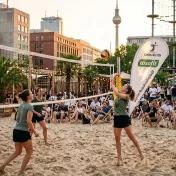
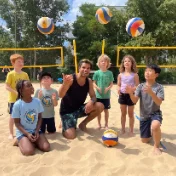
Passing is the least glamorous technique in beach volleyball – and the one without which nothing works. No attack without a set, no set without a clean pass. If you cannot pass in the sand you are not playing beach volleyball, you are collecting balls. The good news: of all the techniques it is the fastest to learn. The bad news: almost everyone makes the same mistake.
The one sentence that changes everything
Experienced coaches teach beginners this sentence first: volleyball is not played with your hands but with your legs. It sounds like a fridge magnet, but it is the most precise error diagnosis there is.
The typical beginner pass looks like this: the ball arrives, the arms shovel upwards, the ball flies somewhere. A proper pass looks like this: the legs bring you under the ball, the arms stay still, the ball rebounds off the forearms. Your arms are a board, not a racquet.
The technique in five points
1. The hands. Palms on top of each other, thumbs parallel side by side. Do not interlock your fingers – that twists the forearms. Thumbs point at the ground.
2. The arms. Straight but not locked. The forearms form a flat surface. The ball meets the fleshy inner side, roughly ten centimetres above the wrists – not the bones.
3. The legs. Shoulder width, one foot slightly forward, knees clearly bent. Lower than indoors, otherwise you cannot move out of the sand.
4. The movement. The impulse comes from the legs: extend as the ball meets your arms. The arms themselves barely move.
5. The shoulders. Point them where the ball should go. The ball travels in the direction your forearms face at contact – not where you are looking.
Why sand changes everything
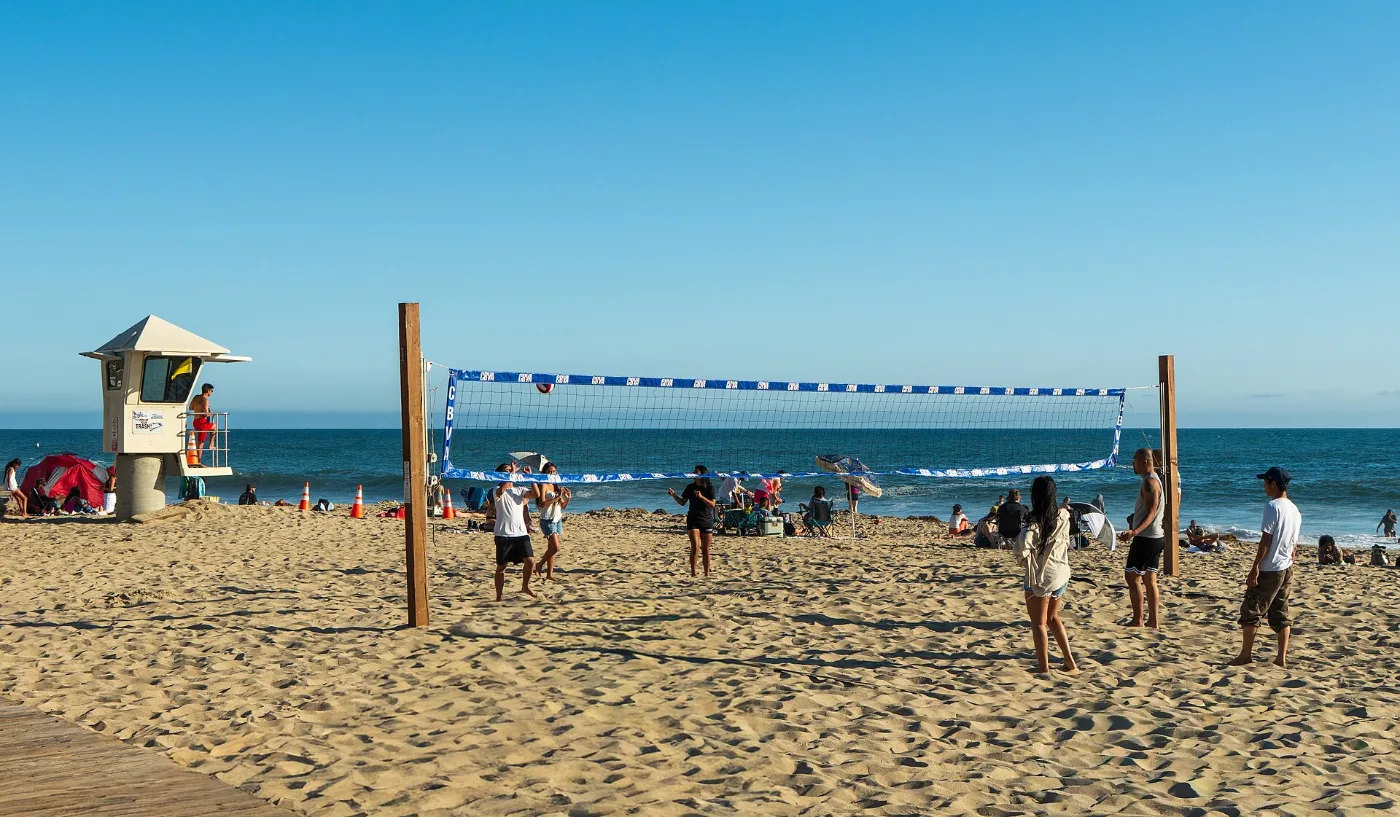
Indoors you stand firm and push off. In sand you sink, every step costs strength and time. That has three consequences for your passing.
You have to start earlier. The time three steps take in sand covers five on a gym floor. Start moving only once the ball is in the air and you arrive late.
You have to stand lower. From an upright position you get no push in sand. A low centre of gravity means faster in every direction.
You cannot correct mid-move. On a gym floor a quick lunge saves you. In sand your foot has sunk in before you need it again. That is why the starting position counts double.
The five most common mistakes – and how to spot them
- Swinging arms. You notice it because the ball travels far too far. Fix: imagine your arms are glued in place.
- Getting under the ball too late. You pass while falling or running. Fix: start moving as the opponent serves, do not wait.
- Ball hits the wrists. It hurts and flies uncontrollably. Fix: deliberately stand lower, then the ball automatically meets the forearm higher up.
- Shoulders pointing elsewhere. The ball flies sideways although the pass “felt right”. Fix: turn your shoulders to the target before contact.
- Interlocked fingers. The forearms tilt and the ball rebounds unpredictably. Fix: palms stacked, thumbs parallel.
Five drills that actually help
1. Passing against a wall. Two metres away, pass the ball repeatedly against a wall. Forces small controlled movements. Works indoors too – ideal for winter.
2. The ten. Ten rallies in a row with a partner without the ball touching the ground. Sounds easy, is not at first. Once it works, increase the distance.
3. Passing while seated. Sit on the ground, partner tosses. Because you cannot use your legs, you immediately feel how little arm movement is needed.
4. Target passing. Put a towel in the sand, partner tosses, you pass onto the towel. Trains shoulder alignment.
5. Called reception. The tosser calls “short” or “long” while the ball is in flight. Trains moving under time pressure.
How much training does it really take?
Proven training plans for adult beginners schedule two to three sessions a week, and the first two to three weeks almost entirely on reception and base position. Do that and you have a usable pass after a month. Mix in serving and spiking and you need three months for the same result.
The difference between reception and defence
Both are passing, but with different jobs. Reception handles a serve – you have time, you can align yourself, and the goal is a high, calm ball to your partner. Defence handles an attack – here the only thing that counts is getting the ball up at all, if necessary with one hand or diving.
For beginners that means: drill reception first. Defence comes on its own once you play enough – and it rarely looks pretty anyway.
Technique is not learned from texts
Passing is decided by details you cannot see yourself: shoulder angle, timing, how low you stand. That is exactly why a camp with a coach pays off – two days replace half a summer of trial and error.