Beach volleyball rules are refreshingly short – until someone shouts “that was an open-hand tip!” and the game turns into a debating society. This article covers the rules that actually cause arguments in recreational play. And because reading alone changes nothing, there is a ten-question quiz at the end. Be honest, nobody is watching.
The framework
| Court | 16 × 8 metres, 8 × 8 per side. No attack line, no centre line. |
| Team | Two players. No substitutions, no fixed positions. |
| Touches | Three per team – the block counts. |
| Sets | Best of three: to 21, deciding set to 15, always by two clear points. |
| Switching sides | Every 7 points, every 5 in the third set. |
| Net height | 2.43 m (men), 2.24 m (women). |
The five rules people argue about
1. The block counts
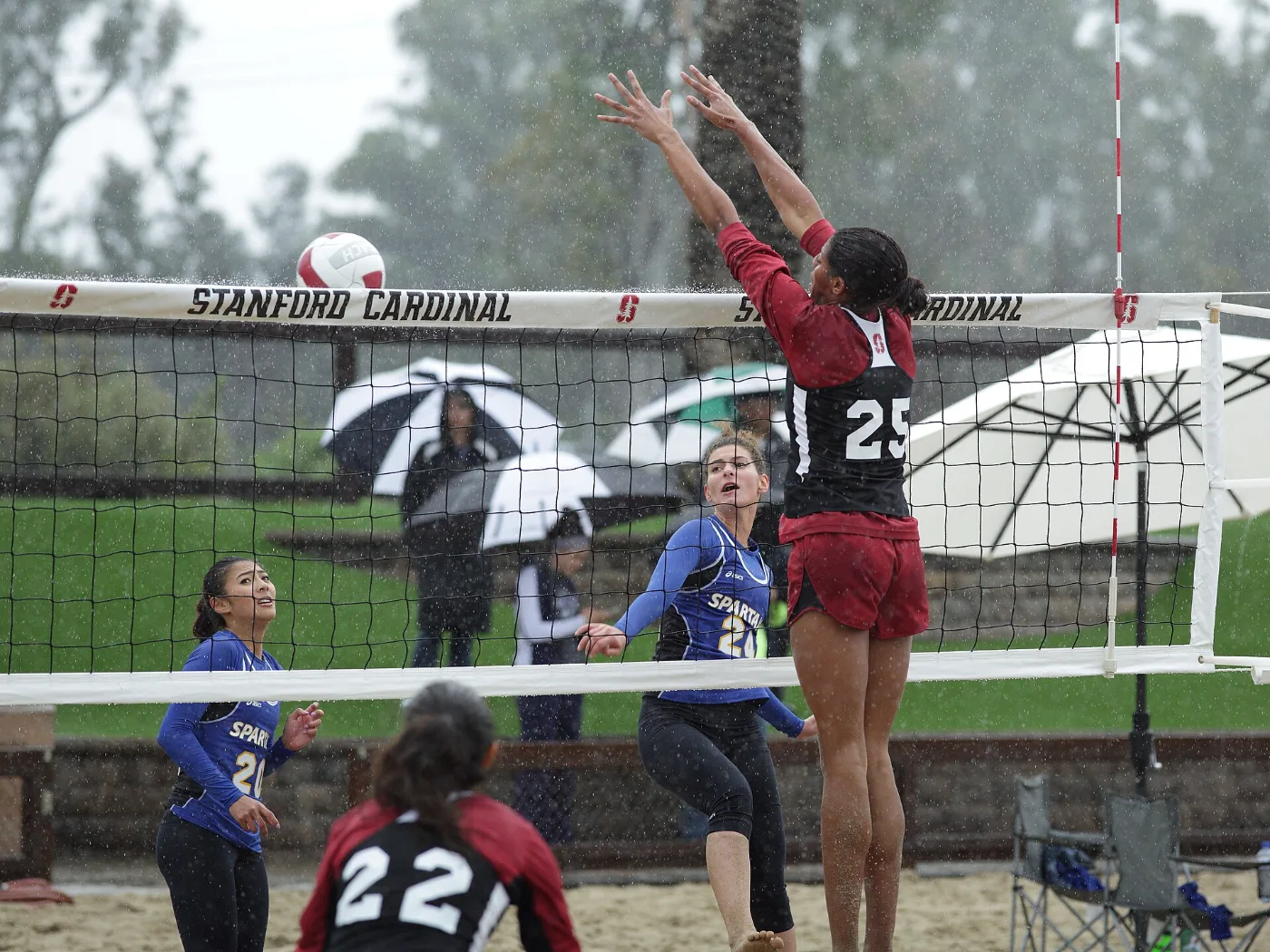
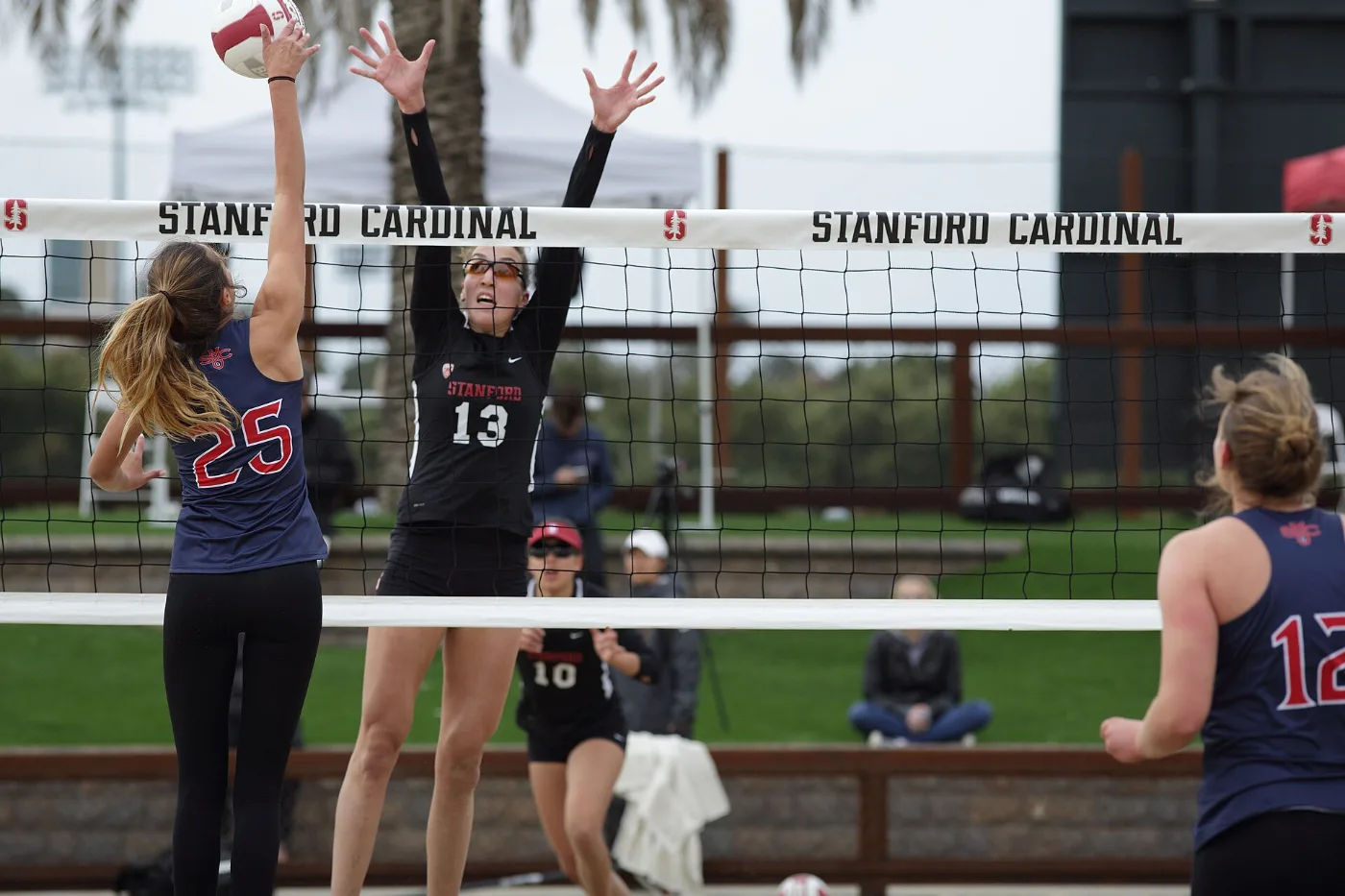
If the ball touches your hand on the block, that is your first touch. Two remain. Indoors it is the other way round – which is why somebody stands there baffled in every second crossover game.
2. No open-hand tip
Pushing the ball over the block with spread fingertips: forbidden. Legal are the edge of the hand, a fist or stiffened fingers that poke the ball – the poke or cobra. The difference is not aesthetics but the rulebook.
3. Setting across the net only square-on
An overhead set travelling sideways across the net is a fault. Only perpendicular to your shoulders is legal. So if you want to trick the opponent with a set, turn your shoulders first.
4. There is no centre line
You may go under the net onto the opponent’s side – as long as you do not interfere. Sounds exotic, happens constantly when chasing a ball.
5. Receiving a serve overhead is allowed but risky
You may take a serve with an overhead set, but it is judged strictly. In recreational play the forearm pass stays the safe option.
The serve: where the point begins
You have eight seconds once the referee whistles. After that you may stand anywhere behind the baseline – unlike indoors there is no sideways limit to the service zone beyond the court width. You must not touch the baseline before contacting the ball; afterwards you may land wherever you like.
A serve that clips the net and still goes over is good. That is the notorious net cord everyone has complained about for fifty years and nobody abolishes.
And the change of serve?
If your team wins a rally while the opponent served, the serve passes to you – and you swap between yourselves. Whoever served least recently is up. This order must hold for the whole set; a mistake here costs the point even if you won the rally.
In or out
The line belongs to the court. If the ball still touches the outer edge of the line, it is in. At tournaments people genuinely inspect the sand to see where the ball landed.
Beach volleyball has antennae on the side bands. The ball has to pass between them. If it crosses outside an antenna it is out – even if it lands in the opponents’ court afterwards.
The special rule almost nobody knows
After touching the block, the same player may play the ball again. You block, the ball drops back on your side, you dig it yourself – perfectly legal. Indoors that would be a double contact. This rule saves countless balls on the beach and is why blocking makes sense even when you are alone at the net.
Attacking gets technical
The hard spike with an open hand is always legal. Everything slower and trickier is watched closely:
- Poke or cobra: you hit the ball with stiffened fingertips or knuckles. Legal, because the contact is clearly brief.
- Hand edge (chop): also legal, often used for short balls behind the block.
- Open-hand tip: forbidden. Guide the ball with spread fingers and you get the whistle.
- Attacking with an overhead set: legal, but only perpendicular to your shoulders. Otherwise it is a fault.
And the infamous “lift”
Every contact has to be brief. If the ball is guided, held or carried, it is a fault. Because this is a judgement call, recreational play applies it with varying strictness. Rule of thumb: if you briefly wonder yourself whether it was clean, it usually was not.
Weather, wind and time-outs
Beach volleyball is played in almost any weather. Rain does not stop play, thunderstorms do. Strong wind is not a reason to interrupt – wind is part of the game and one reason the side switch every seven points matters so much.
Each team has one 30-second time-out per set. In official competitions a technical time-out is added in sets to 21 once the combined score reaches 21. Recreational players mostly ignore this and pause when everyone is out of breath.
Five situations that come up again and again
The ball touches both players at once. That counts as one touch. Either of you may play the next ball.
The ball crosses the net and the wind brings it back. Legal – you may go and get it, even outside the court, as long as you obstruct nobody.
A player touches the net. A fault, but only if it happens during a playing action and affects the play. Hair brushing the band is not a fault.
An attack hits the net cord and drops back. Play on normally – you still have your remaining touches.
Someone reaches over the net to block. Legal, provided they touch the ball only after the opponent has attacked or clearly has no third contact left.
Test yourself: 10 questions
Ten questions with instant answers and explanations. Score nine or ten and you may officially referee at your local net.
Rules quiz
The official rulebook
Everything here follows the official FIVB rulebook, valid from 2025 to 2028. Download it – next time a discussion breaks out in the sand you will be the one with the evidence on your phone.
Official Beach Volleyball Rules 2025–2028
The full rulebook of the world federation FIVB, English, around 80 pages.
Illustrated Casebook 2026
Disputed situations with drawings and rulings – the more entertaining of the two.
Knowing the rules is one half
The other is applying them while playing. In our camps you play in groups by level – with a coach who explains these situations the moment they happen.