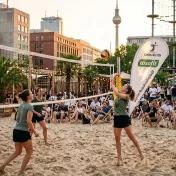
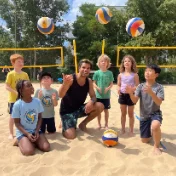
From the outside beach volleyball looks like a holiday: sun, sand, a ball. On your first attempt you discover that the sand eats every step, the ball ends up somewhere other than intended – and that after twenty minutes you are breathing like you just ran a half marathon. Welcome. This is exactly the moment where most people get hooked.
This guide takes you from “never played” to your first real rally. No jargon, just the things that actually matter in Berlin.
The rules in 60 seconds
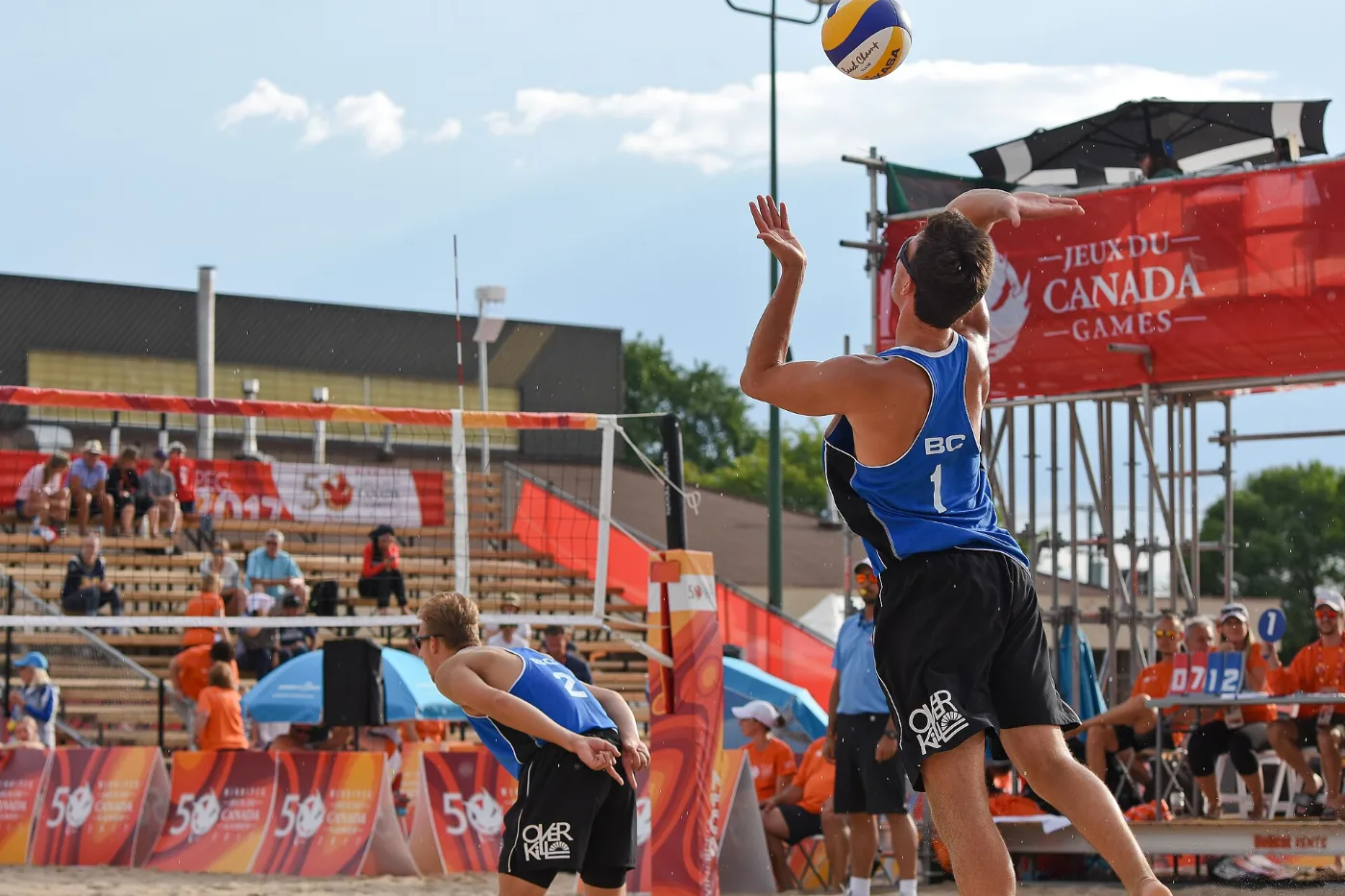
Two against two. The court is 16 by 8 metres, so eight by eight per side. Three touches per team, then the ball has to go over. Unlike indoors, the block counts as the first touch – block and then pass, and you have already used two.
Sets go to 21 points, the third to 15, always with a two-point margin. There are no fixed positions: you do everything – receive, set, attack, block. That is the biggest difference to indoor volleyball and the reason beach gets addictive so fast.
Two rules beginners break constantly
No open-hand tip. Pushing the ball over the block with your fingertips is forbidden. Use the edge of your hand, a fist or a flat hand instead – in the sand that is called a poke or a cobra.
Setting across the net is tricky. An overhead set must not travel sideways over the net; it is only legal perpendicular to your shoulders. It sounds pedantic but gets called even at amateur tournaments.
Your first hour: what really counts
Experienced coaches sum it up in one sentence worth framing for your first session: volleyball is not played with your hands but with your legs. The hands only control the ball – the legs get you to where the ball is going.
In practice that means the first two to three weeks are almost entirely about passing and your base position. No serving drills, no spiking. Only once you stand securely and return the ball under control does the rest follow.
The base position in sand
Weight on both feet, slightly forward, soft knees, arms relaxed in front of you. In sand this is harder than on a gym floor because you balance constantly – which is why beach players get their famous core strength from playing, not from crunches.
Passing: the one thing you really have to drill
Arms straight and together, hands joined, forearms forming a board. The ball meets the forearms, not the wrists. And crucially: the power comes from your legs, not your arms. Shovel with your arms and the ball disappears into the neighbouring court.
The self-test for week two
Can the two of you keep ten rallies going without dropping the ball? Then you are through the worst. Those ten are also our dividing line between level A2 and A3.
What to expect physically
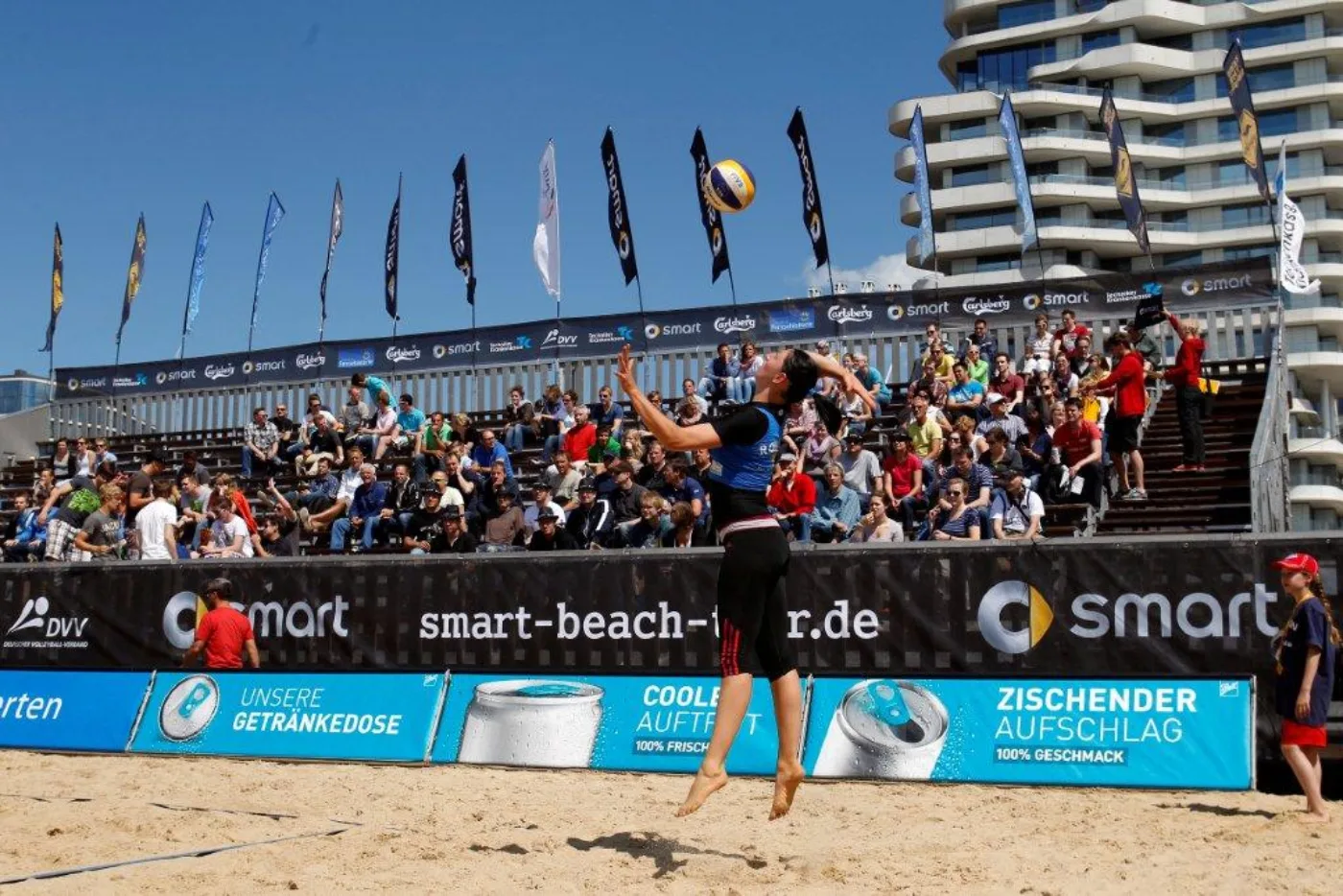
Short sprints through sand push your pulse to 70 to 85 per cent of maximum – comparable to interval running, only more entertaining. The soft surface raises energy consumption by around 15 per cent compared to firm ground.
So plan your first session for an hour at most. And warm up properly beforehand, at least fifteen to twenty minutes. In any serious training plan that is not a recommendation but a requirement – the most common sand injuries happen cold, in the first minutes.
Equipment: the shortest list in sport
- A ball. Beach balls are softer and 10 to 15 per cent lighter than indoor balls so they hold longer in the wind. An indoor ball will do at the start.
- Shorts and a shirt. Nobody needs more.
- Sand socks – or bare feet. Barefoot is normal, but at 35 degrees sand becomes a hotplate. Socks are cheap and save your soles.
- Sunscreen and water. More than you think. Reckon on one and a half litres for two hours.
Where to start in Berlin
The lowest barrier is an open court at unpopular times – Tuesday afternoon rather than Sunday evening. Public courts can be found at Volkspark Friedrichshain and Strandbad Müggelsee; bookable facilities exist at Beach Mitte and Beach 61.
The faster route, though, runs through people. Beach volleyball is the one sport you cannot play as a pair – you need at least four. If you know nobody, the BeachTreff app lists open games across the city.
The three most common beginner mistakes
- Wanting too much too early. A jump serve in week one looks good on Instagram and ruins your technique. Passing first.
- Taking your partner’s ball. The classic reflex: both run, nobody plays it. Call “mine” or “yours” loudly – from day one.
- Beating yourself up. Mistakes belong to the sand. Experienced coaches have a neat rule for this: after the game do not analyse the errors but ask yourselves what went well and how to repeat it.
The fastest way in
In a beginners’ camp you learn more in two days than in half a summer alone at the net – small groups, a coach beside you, everything from the ground up. Complete beginners start at level A1.