Sand is the only training surface that gives you more stimulus and less muscle soreness at the same time. That sounds like marketing but is well researched – and it changes how you should plan jump training.
What studies show about jump training in sand
Plyometric training – jump training with short ground contact – has been compared on sand versus firm surfaces several times. Three findings keep recurring:
The training effect is there. Eight weeks of sand-based jump training significantly increased vertical jump height in female volleyball players. In junior handball players, seven weeks were enough for large gains.
Soreness is lower. With an identical programme, sand caused noticeably less muscle soreness than firm ground – while improving both jumping and sprinting. The sand cushions the landing, so the eccentric load is smaller.
Muscle activation is higher. Because the surface gives way and is unstable, more musculature has to work to stabilise you.
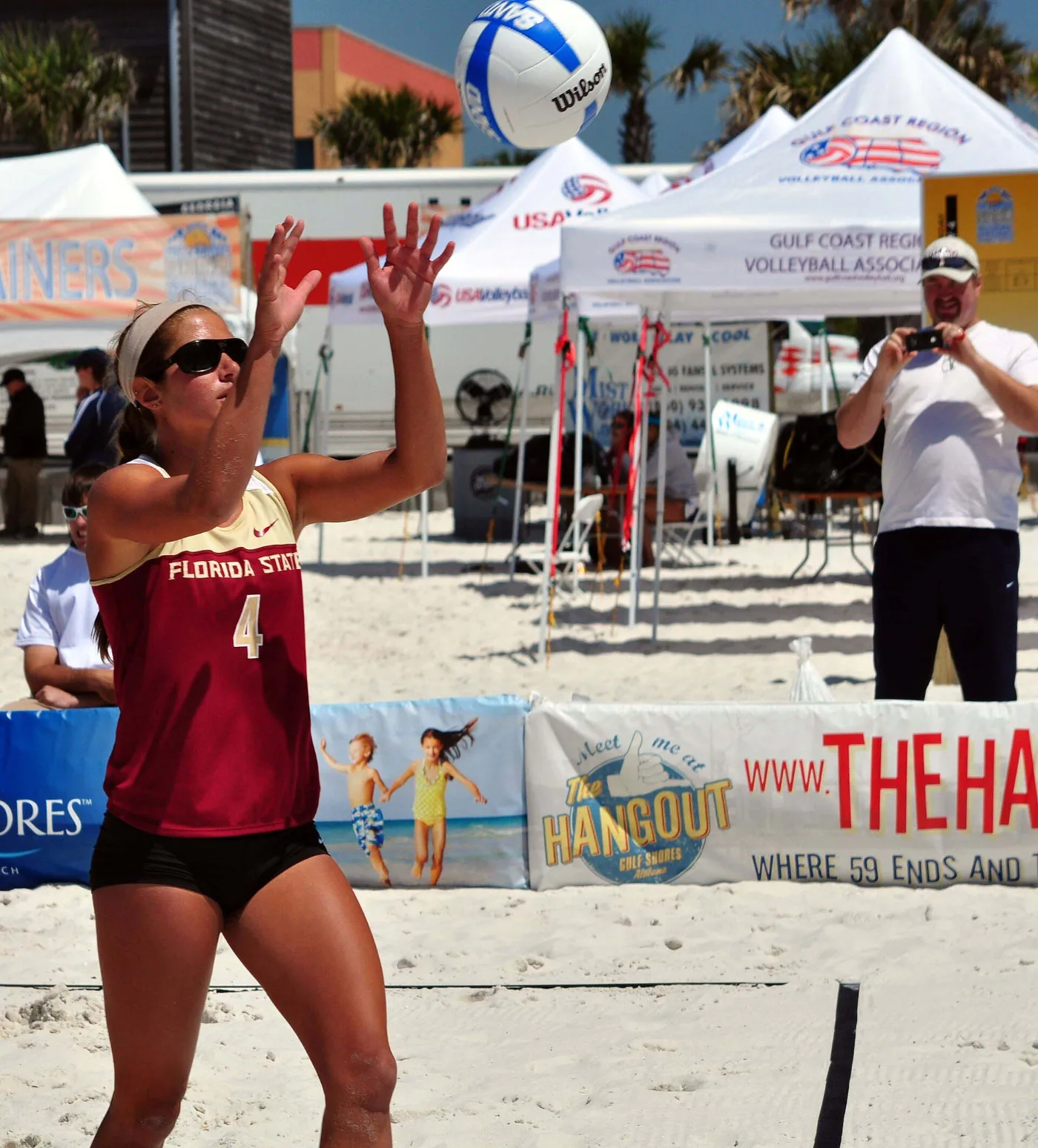
What that means in practice: you can jump more often in sand than on a wooden floor without wrecking yourself. If you play twice a week you can add a third short jump session – on hard ground that would be too much for most people.
The four qualities that matter
Beach volleyball is not an endurance sport with occasional jumps. It is hundreds of short, maximal actions with pauses in between. Four things decide:
Acceleration. The first two steps get more balls than any endurance base.
Jump endurance. Not maximum height but the height of your fortieth jump.
Core stability. In sand every movement starts from an unstable base. Without a core you lose force on the way from ground to arm.
Ankle and hip mobility. If you cannot get low, you take off from a worse position.
Twelve weeks, three blocks
Block 1 (weeks 1–4): build-up
The aim is resilience, not performance. Twice a week, 25 minutes:
Bodyweight squats 3 × 15 · lunges 3 × 10 per leg · forearm plank 3 × 30 seconds · calf raises 3 × 20 · single-leg stands 3 × 30 seconds per side.
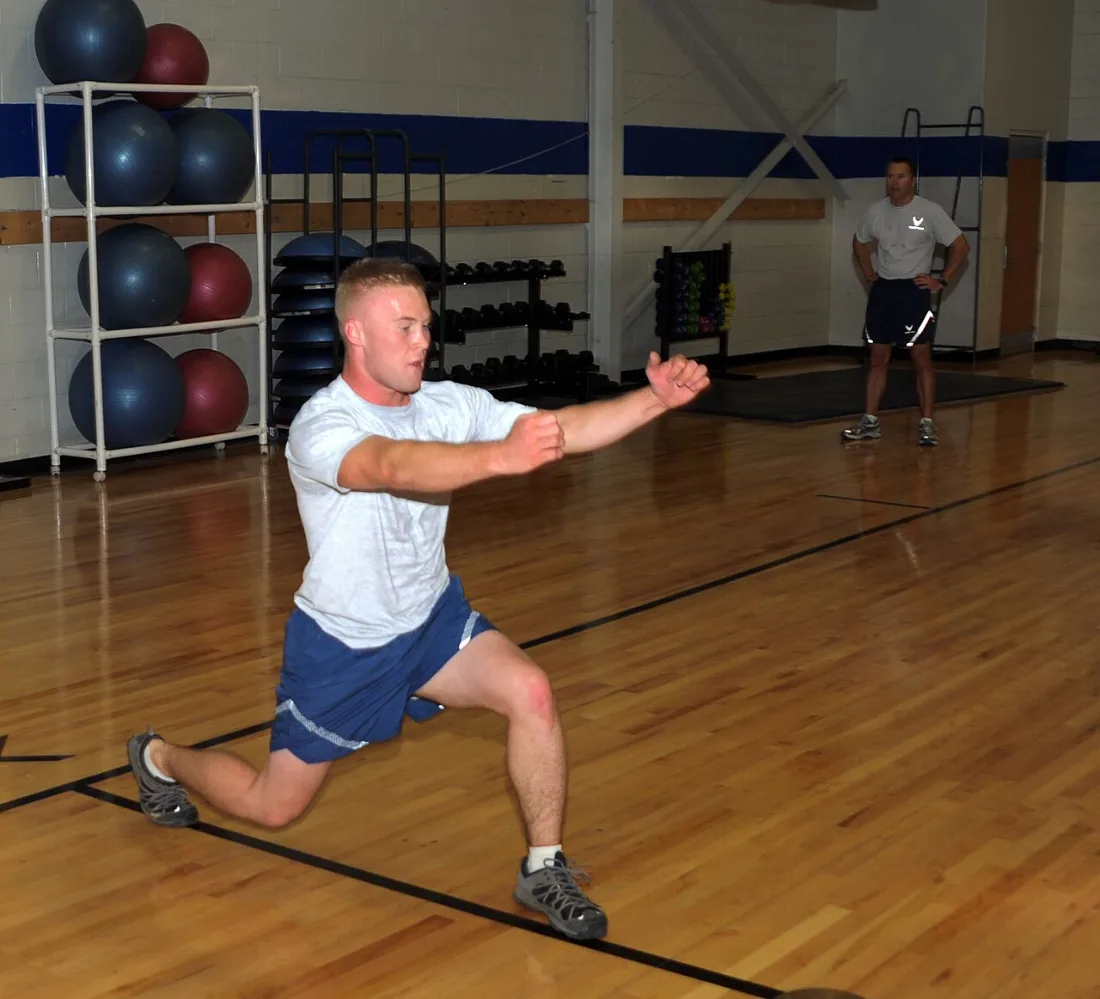
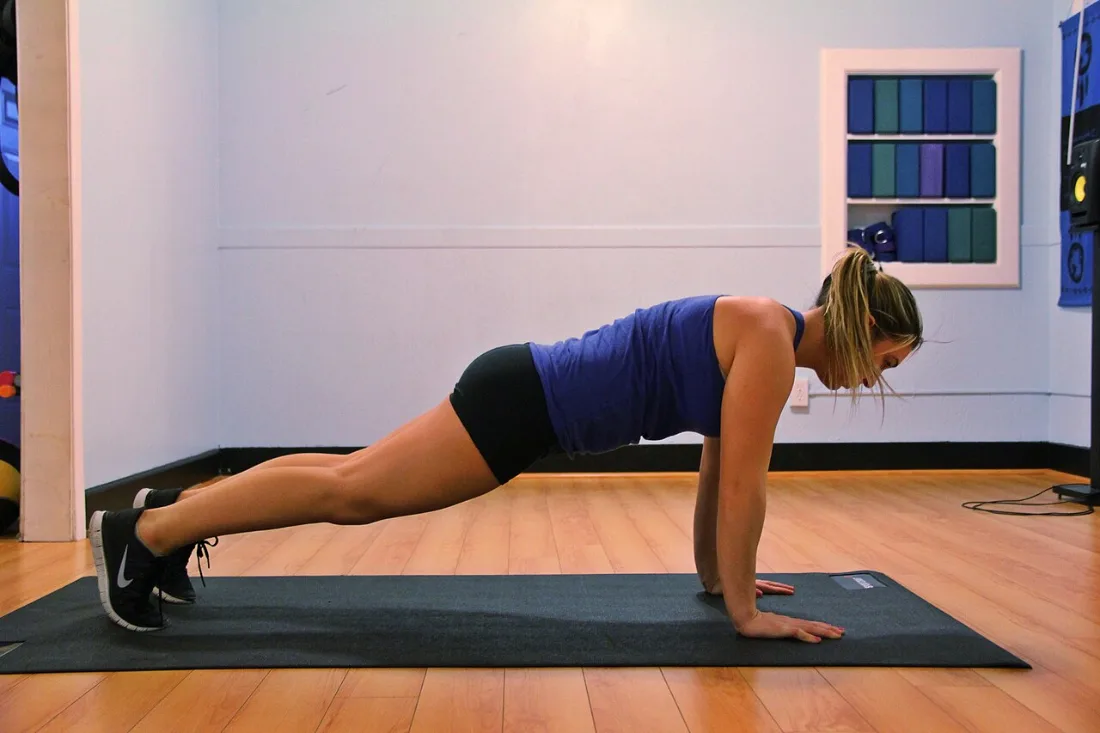
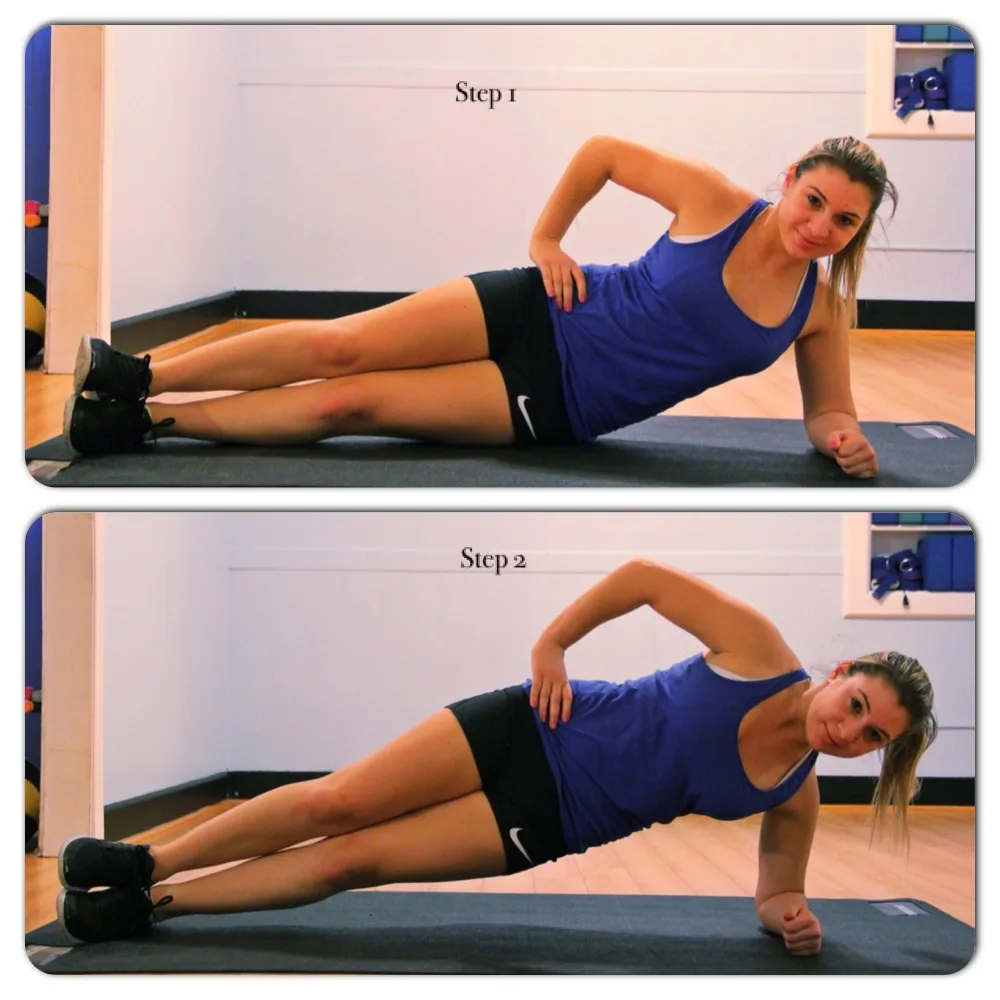
If you train in sand, bodyweight is plenty. The surface supplies the resistance.
Block 2 (weeks 5–8): jump power
Now the plyometric elements come in. Twice a week, always rested and never after a hard playing day:
Jump squats 4 × 8 · two-footed broad jumps 4 × 6 · lateral jumps over an imaginary line 4 × 20 seconds · skipping rope 4 × 45 seconds.
Rest 60 to 90 seconds between sets. Jump training is quality training – when height drops the session is over, no matter how many sets are still on the sheet.
Block 3 (weeks 9–12): speed
Five-metre accelerations from a standing start, 10 repetitions with full recovery · accelerations with a change of direction after 3 metres, 8 repetitions · reaction starts on a signal, 8 repetitions.
This session takes only 20 minutes and feels too easy. It is not – full recovery is part of the stimulus.

What to do in the gym – and what not
A gym is not necessary but useful. If you go, go for squats, deadlifts and rows – the big movements you cannot load enough in sand.
What you do not need there: leg extensions, calf machines and anything isolating single muscles. In sand no muscle ever works alone.
And a rule many ignore: no maximal strength work in the week before a camp or tournament. The effect comes weeks later, the fatigue immediately.
The most common mistakes
Jump training at the end of a session. Jumping tired means jumping badly and trains the wrong movement. Plyometrics belong right after the warm-up.
Every day. Jump power is built during recovery. Two sessions a week with 48 hours between them beat five half-hearted ones.
Legs only. The hitting arm needs shoulder stability, otherwise you invite the injury with the longest absence in beach volleyball.
Too much at once. Coming from nothing means starting with block 1 – even if you feel fit.
Common questions
Does jump training in sand really beat indoors?
Not necessarily more jump height, but a better ratio of stimulus to cost: comparable gains with clearly less soreness. For beach players there is a transfer advantage too – you train on the surface you play on.
How often should I jump?
Twice a week deliberately, with at least 48 hours between. Playing sessions count: if you play a tournament on Saturday you do not need jump training on Sunday.
Do I need weights?
Not for the first months. Sand supplies enough resistance and movement quality beats added load. If you stagnate after six months, squats and deadlifts are the next step.
I am over 40 – does the plan still apply?
Yes, with one adjustment: block 1 runs eight weeks instead of four, and the jump sets get shorter. Sand is the better surface at that age precisely because joint loading stays minimal.