Beach volleyball needs two people. Even so, there are four things you can train entirely on your own – and one of them decides most sets in recreational play: the serve.
What works alone – and what does not
Works alone: serving, ball control, footwork in sand, conditioning. Skills where the ball does not have to come from an opponent.
Does not work alone: defence, blocking timing, reading the opponent and playing with a partner. Those need someone opposite you, and nobody ever learned to read an attack by playing against a wall.
The honest framing: solo training does not replace playing. It makes your playing hours more valuable, because there you can concentrate on what only works there.
The serve: the most rewarding solo work there is
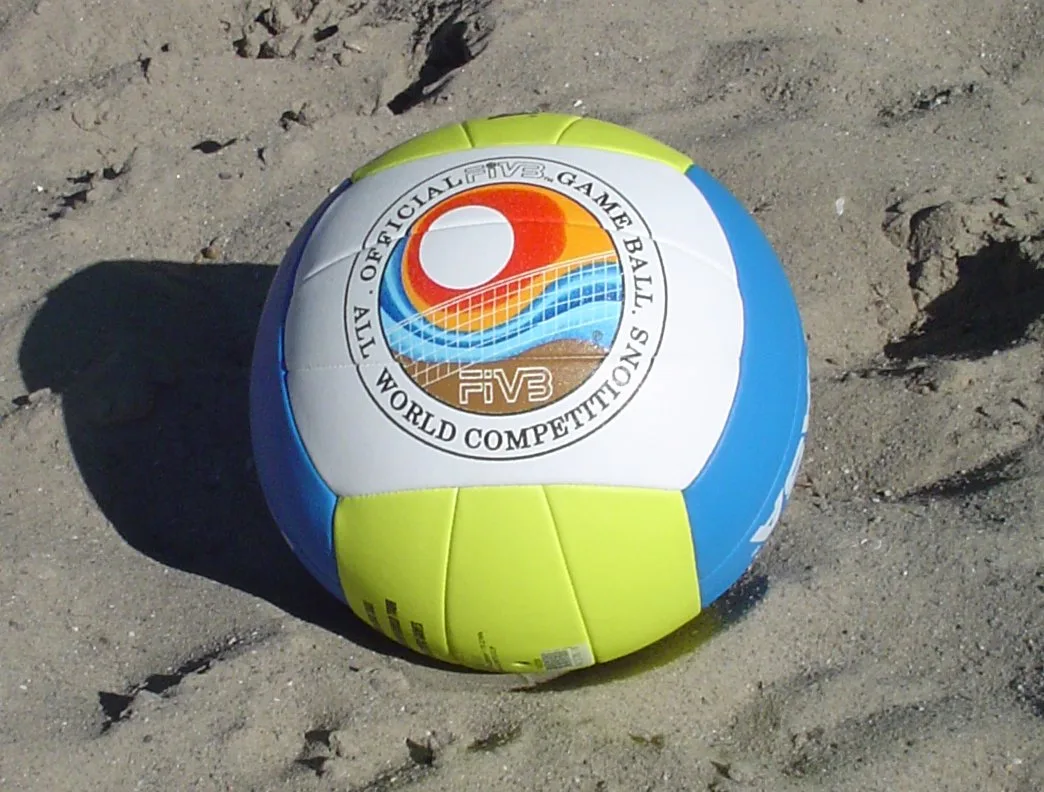
The serve is the only action in the game where nobody disturbs you. It is therefore the only one you fully control – and in recreational play a considerable share of points traces straight back to it.
The routine that works: take every ball you can get to one side. Serve them, collect them, serve them back. Two passes make a session.
What matters is not the quantity but the target. Before every serve decide where it should go – back left corner, short behind the service line, at the middle. A towel or a water bottle as a marker is the difference between hitting balls and training.
The rule of thumb for progress: accuracy first, then speed. If you land eight out of ten serves in your chosen third, you may hit harder. If you cannot, adding speed only trains you to be less precise.
And the reason solo work pays off especially here: you can practise in any wind. That is exactly what most players lack – they only serve in matches, and only a few times per set.
Ball control: wall and self-set
At the wall. A smooth house wall is enough. Set the ball repeatedly against it from standing, around head height. Watch your hand position, not the count. As soon as the ball comes back unsteady, the contact was not clean – feedback nobody gives you in a match.
Self-set in the sand. Play the ball up, let it travel, play it up again. First ten clean hand-set contacts in a row, then ten forearm contacts, then alternating. It sounds trivial but is the drill that builds ball feel on a soft surface fastest.
The progression: self-set with movement. Play the ball two metres in front of you, run to it, play it back to where you started. That trains exactly what is hard in sand – arriving under the ball and still standing still.
Footwork: the underrated session
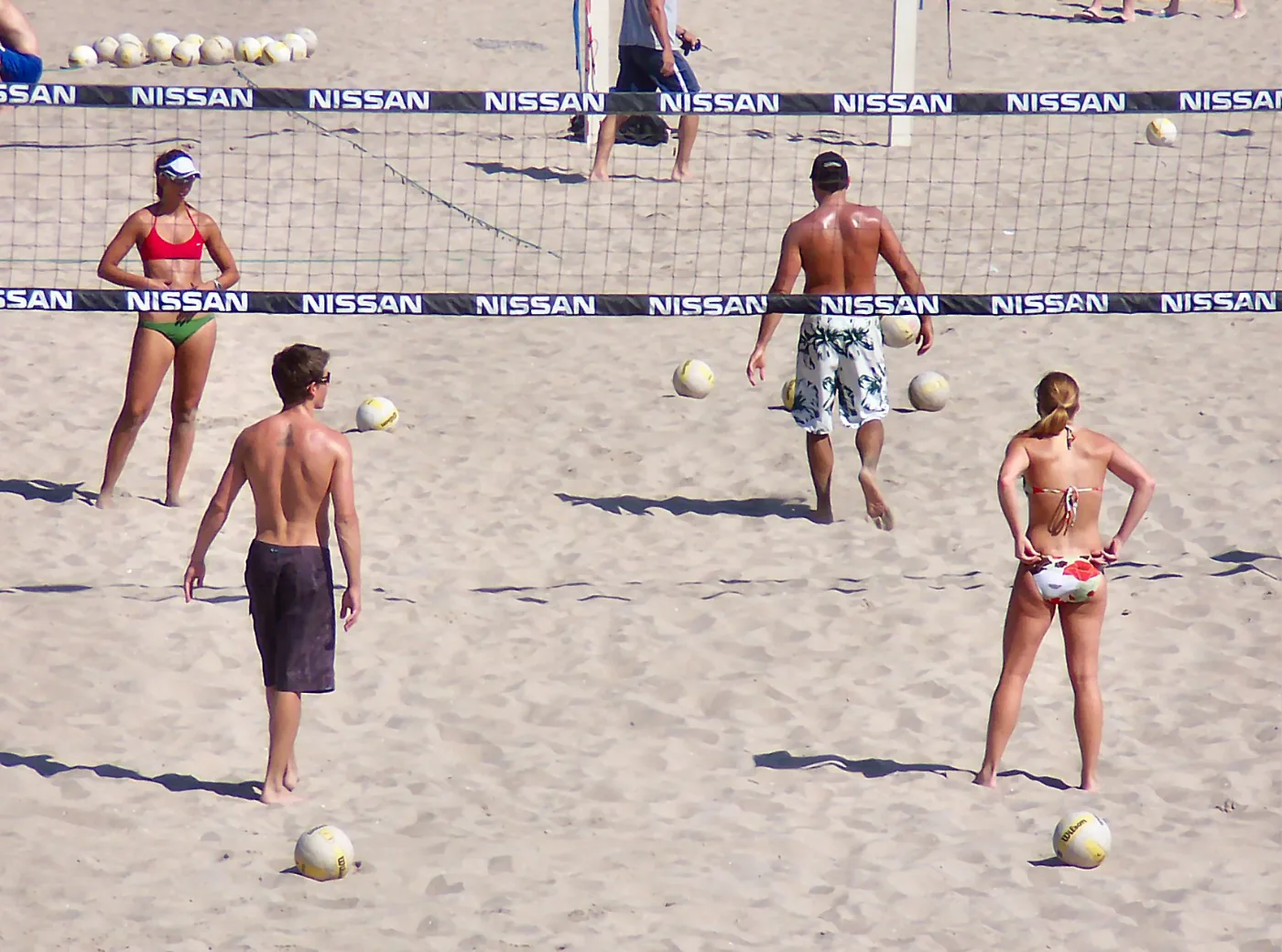
Without a ball, with full attention on the legs. Three drills, four rounds each:
Lateral shuffling across the width of the court and back, in a low stance, without crossing your legs.
Acceleration from the defensive position: stand still, then two explosive steps forward, stop, return.
Attack approach without a ball: the last three steps, the take-off, the landing. If you have not rehearsed the approach in sand, you jump off balance in a match.
A 45-minute routine
10 minutes warm-up with easy running and joint work · 15 minutes serving with a target · 10 minutes self-set and wall work · 10 minutes footwork without a ball.
Twice a week over eight weeks changes your serve visibly. It is the session you can do when your partner cancels – which is why most people never do it.
Where to train alone in Berlin
At most venues you can rent a court for an hour, and on weekday mornings there is almost always one free. The overview is on our page about outdoor courts in Berlin.
If what you lack is a partner: the BeachTreff app shows open games in Berlin, often on the same day. And if you want to play regularly with coaching, our weekly training is the more direct route.
Common questions
How many balls do I need?
For serving practice three to five is ideal, then you do not have to walk after every ball. One works too – the session gets shorter and you run more, which is no disadvantage.
Is wall training actually useful?
For hand position when setting, yes; for everything else, little. The wall returns the ball differently from a team-mate. Use it as a technique check, not as a substitute for playing.
Can I train attacking alone?
The approach and take-off yes, the hit only partly. What works well: toss the ball up yourself and hit out of the approach. That trains timing and contact point, even if the set is not like a partner’s.
Does solo training make sense in winter?
Very much. Indoor court time is cheap and free in the mornings, and serving without wind is the best way to consolidate technique before it has to deal with wind again outdoors.