Wind is the only opponent on the court that never gets tired. It takes away serves that were perfect and hands you points you did nothing to earn. The difference between frustration and advantage is not the wind itself but whether you planned for it.
And you never have it for long. That is exactly why beach volleyball has a rule indoor volleyball does not: in the first two sets teams change ends every seven points, in the third set every five. Not out of politeness, but so that sun and wind work for both sides for the same amount of time.
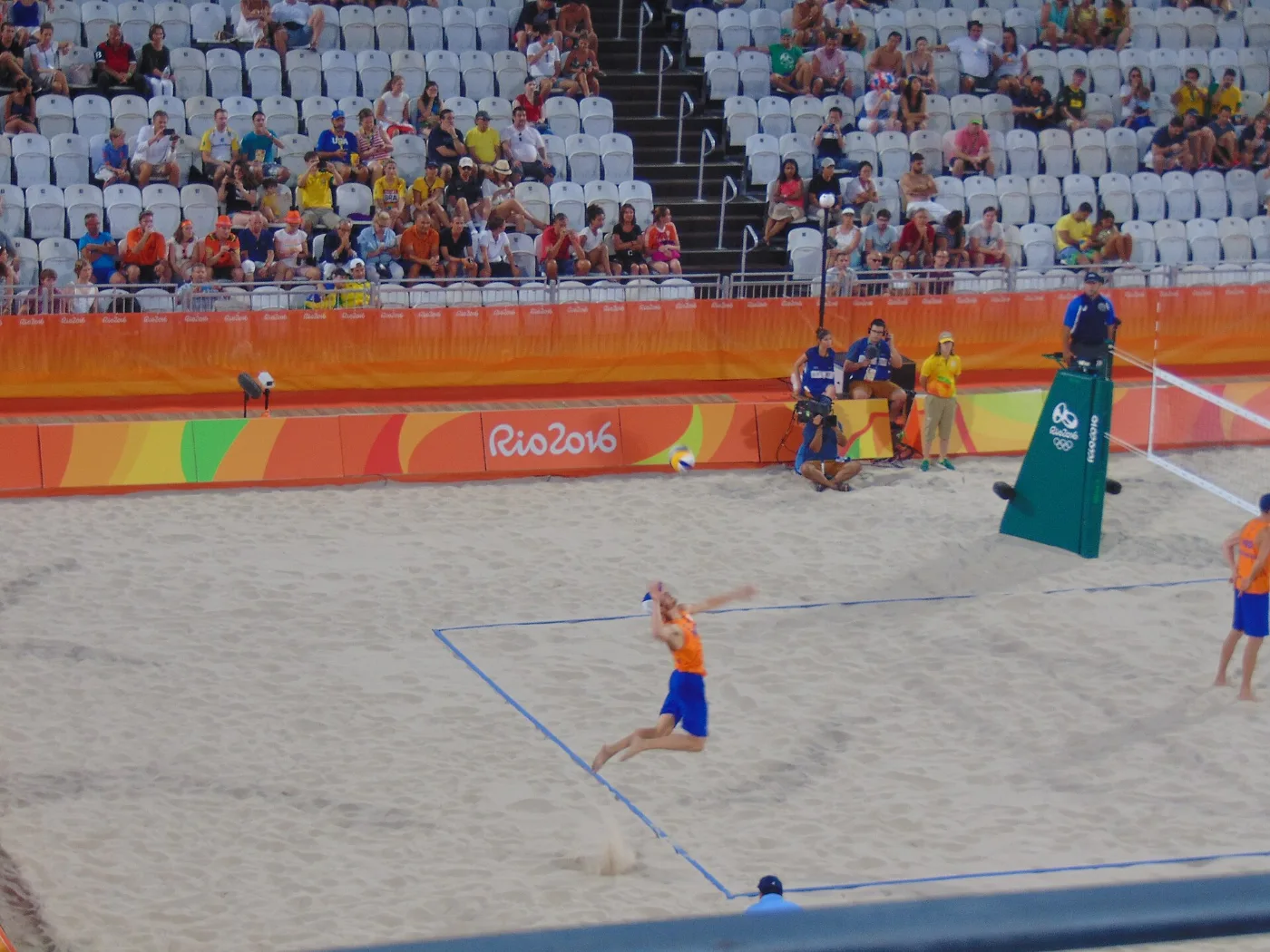
Think in blocks of seven points
This is the most important tactical consequence of the side-change rule, and almost nobody in recreational play uses it. You never have the wind behind you for more than seven points. So plan in blocks:
On the good side – wind at your back – you take points with the serve. This is where you may take risks, because the wind carries you.
On the bad side – wind in your face – you manage. Safe serves, no unnecessary risk in attack, avoid errors. A team that loses only two points on the bad side has won that block.
Say it out loud. “Next side is ours” takes two seconds and changes how you play the next seven points. A team that consciously registers the side change plays the same wind differently from one that just walks through it.
The three wind directions – and what changes in each
Tailwind
The wind pushes every ball. The basic rule is therefore less power, more control, otherwise the serve lands beyond the baseline. Aim for the back third of the opponent’s court, not the line. More on variants and contact point is in our serving article.
Stefan Homberg, author of the best-known beach volleyball coaching manual, gives beginners advice here that sounds contradictory at first: on the jump serve, throw the ball too much onto yourself and add power, rather than letting a long toss get displaced by the wind. A ball you do not strike cleanly is almost always out in a tailwind.
The same goes for attacking: hard hits fly long with the wind. This is the side for shots and short balls.
Headwind
Now you need power just to get the ball there. Two approaches work, and they exclude each other:
With topspin. A ball with forward rotation dives early into a headwind. It arrives shorter than the opponent expects and is still predictable for you.
As a float serve. A ball without rotation becomes maximally unstable in a headwind. It is the most unpleasant reception there is – but also hard for you to control. Use it if you own it, not as an experiment at 18:19.
Homberg adds two things into a headwind that hardly anybody does: backspin, which makes the flight path change abruptly, and short lofted serves – cross-court, between the two receivers, or straight at the feet. A headwind is the best opportunity for the short serve, because the ball slows down by itself.
In attack you may hit harder on this side than usual. The wind brakes for you.
Crosswind
The nastiest of the three, because it forgives nothing and gives nothing. The ball is pushed sideways across the whole flight path.
Two adjustments help. First: move your serving position into the wind and aim correspondingly offset – you play not to where the ball should land but to where it has to start. Second: give the ball rotation. A spinning ball is displaced noticeably less than a floating one. In a crosswind, spin is your friend, not your enemy.
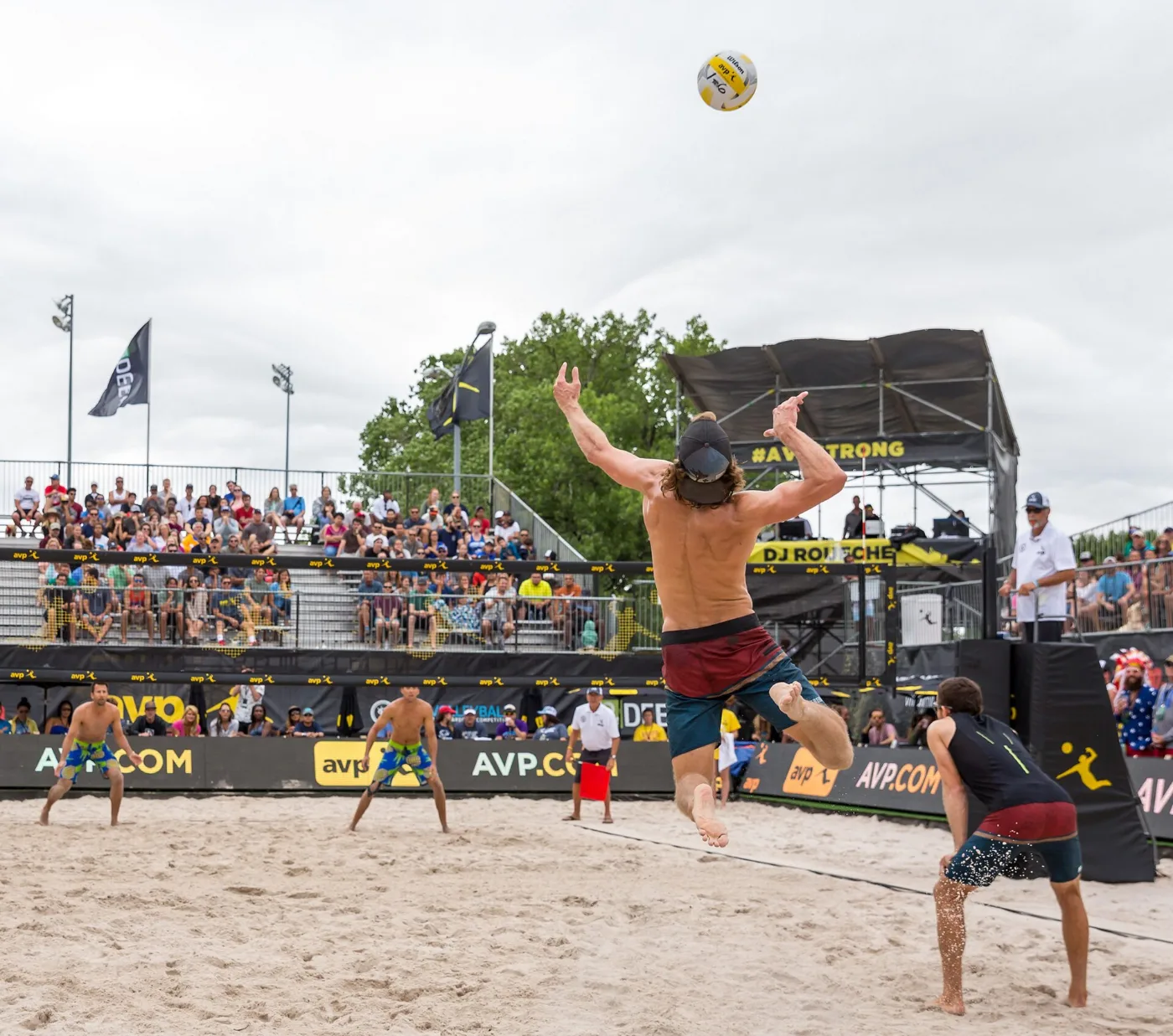
Passing and setting: what breaks first in wind
Not the serve. The set.
A hand set is a double risk in wind: it gets displaced, and you touch it under time pressure – exactly when sets get sloppy and whistled. In wind, bump setting is the right choice – why hand setting in sand is judged more strictly anyway is explained here, including for people who normally love to hand set.
For the reception itself there is a sand technique that looks excessive indoors and makes the difference outdoors: the ball is taken on almost straight arms and then guided towards the chest without the wrists doing any work. That takes energy out of the ball and gives you control over direction – the only technique that works reliably in wind.
And the set itself: flat and short rather than high and long. Every metre of height is a metre the wind can work on. High sets are for windless days. Otherwise, no.
Sun and wind belong together
On an outdoor court the two rarely appear separately. Two recommendations from Homberg you can apply immediately:
Sun behind you? Skyball. The very high serve that comes down almost vertically is hard to receive anyway. Coming out of the sun, it is half a point already.
If the sun is low, serve along its rays. The opponent then looks straight into it on every reception.
Vladimir Kostyukov, head of a scientific working group for beach volleyball, sums up the tactical core like this: serves always go to whichever opponent is currently receiving worse or is more tired. In wind that assessment shifts during the match – a player who has run a lot against the wind receives differently ten points later.
The four most common mistakes in wind
The same tactics on both sides. Playing the wind side exactly like the headwind side wastes half your chances and creates unnecessary errors on the other half.
Hand setting out of habit. The clean set from Tuesday night indoors is a different animal at force five.
Setting too high. The classic: the set looks good but drifts two metres – and the attacker hits off balance.
Noticing the wind only after losing the first point. During the warm-up, look at where the flag, the net tape or the drifting sand points. Which Berlin venues are especially exposed is shown in our overview of outdoor courts. Twenty seconds before the match saves you three points in the set.
Common questions
When is it too windy to play?
To play at all, almost never – to play the way you are used to, quite quickly. From about force four, high sets and float serves stop working reliably. The game becomes shorter, flatter and more error-prone, but it stays playable. Tournaments are practically never cancelled because of wind.
How do I read the wind direction quickly?
Look at the net tape and the antennae – both are more reliable than any flag at the edge, because they hang exactly where the ball flies. Drifting sand at the baseline is the second signal. Check again after every side change; wind turns.
Should I jump serve at all in wind?
Into a headwind, yes – there the power helps. With a tailwind it is the biggest error risk in your whole game; a jump float or a precise underhand serve is often the smarter choice. What matters is not what you can do but what works on this side right now.
We play without referees – do we still count side changes?
Absolutely. Every seven points, every five in the deciding set. Without the change, in wind the coin toss decides the match instead of you. Track the sum of both scores – at 7, 14, 21 you switch.