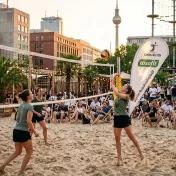
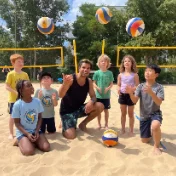
There is a moment nearly every beach volleyball player knows. You have been playing in the park for a year, it is going reasonably well, and somebody says “let’s sign up for a tournament”. And then comes the thought that stops most people: I’m not good enough.
That thought is almost always wrong. Not because you are better than you think, but because recreational tournaments do not exist to separate the good from the bad. They are a format for playing more matches in one day than you normally play in a month. This article removes the fear by telling you in advance what actually happens.
This is what tournament day feels like
A short glimpse from one of our tournament days – exactly the atmosphere waiting for you the first time.
Video: Sandathleten
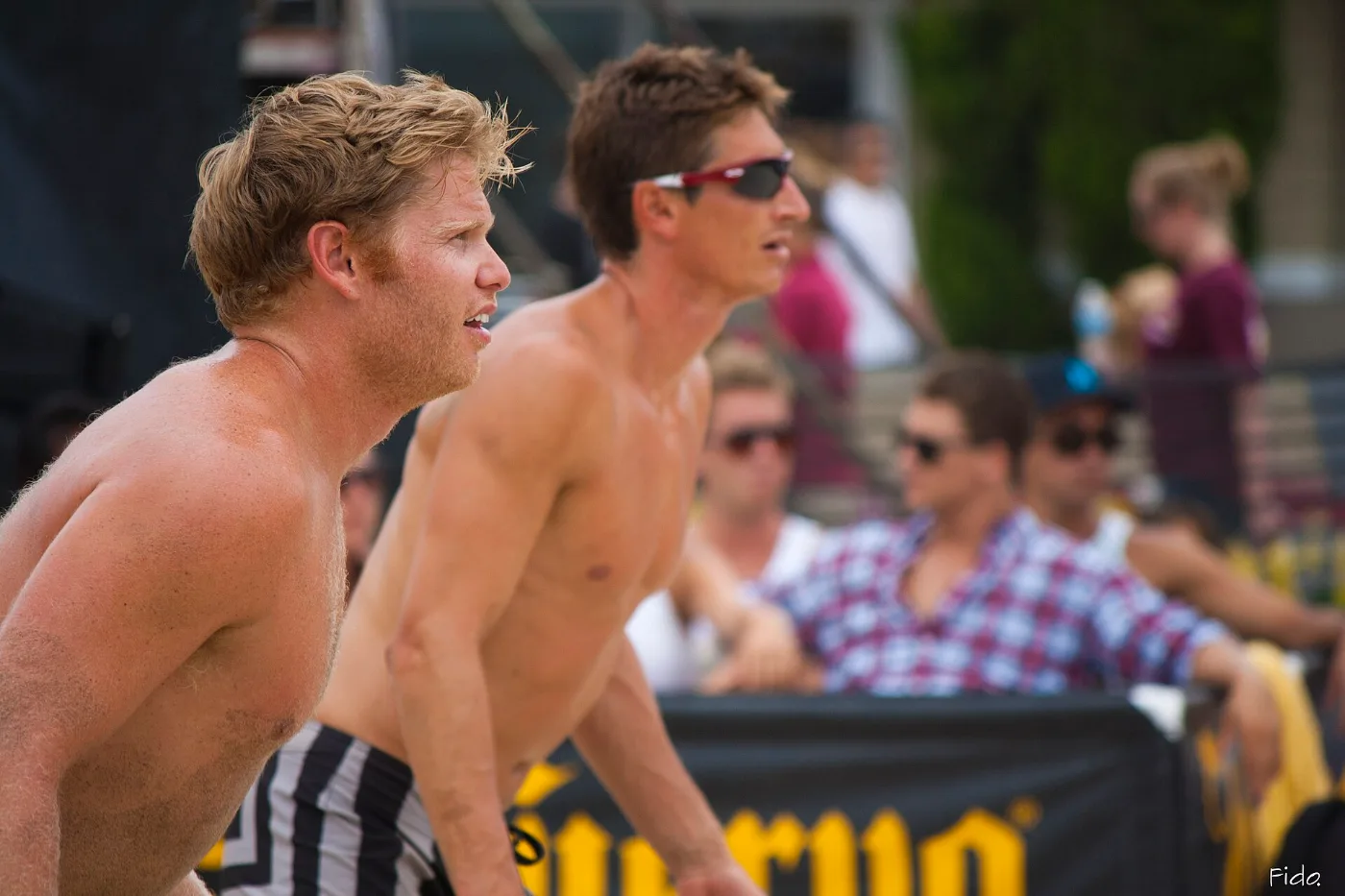
Which tournament is right for your first time?
From May to September Berlin has tournaments almost every weekend. They differ more than their names suggest:
- Recreational and open tournaments – mixed fields, often mixed pairs, focus on fun. The right format to start. Entry usually €15–30 per team.
- Club tournaments without ranking points – slightly more ambitious but still open. A good second step.
- Ranking and federation tournaments – here you meet people who train three times a week. Not the right first tournament, but a great day to watch.
- Company and charity tournaments – often the most relaxed format there is. If your employer runs one, take part.
The simple rule for choosing
If the entry text says “recreational”, “open”, “fun” or “mixed, open to all”, you are in the right place. If it names a ranking class or a minimum league, it is too early. When in doubt, email the organiser – the answer is nearly always friendly and honest.
What a tournament day actually looks like
Pay the entry fee in cash, register the team, photograph the schedule. Cash is the norm almost everywhere.
Usually 10–15 minutes on court, often shared with your opponent. Use it for serves, not for swinging.
Three to five matches through the morning, one set to 21 each. 20–40 minutes between matches.
The most critical phase of the day. Eat heavily now and you will play badly all afternoon.
Main draw or consolation draw depending on placement. Both count equally for enjoyment.
There is usually something to win. It is usually beer or a voucher.
The key difference from park training: you play six to eight sets in one day. That is more volume than a whole month of training – and the reason a single tournament advances you more than four normal evenings.
What you actually need to pack
Absolutely essential: at least 3 litres of water, SPF 50 sunscreen, something for your head, two shirts to change into, cash for the entry fee.
Saves the day: bananas and salty snacks, a towel, tape for your fingers, sunglasses with a strap, a second sunscreen (somebody will borrow your first one and keep it).
Nice to have: your own ball for warm-up, a small folding chair, a power bank, spare underwear – sand gets everywhere.
The most underrated item: a spare sunglasses strap. Sounds ridiculous until the two o’clock sun sits exactly in your line of sight.
The five mistakes beginners make on their first tournament day
1. Not drinking enough, and drinking the wrong thing. By far the most common one. If you only drink when thirsty you are already behind – fluid takes several hours to reach where it needs to act. Which is why drinking for a tournament day starts the evening before, not at nine in the morning.
Professional beach players recommend for hot days: roughly a litre within the first hour after waking, then around 200 ml every 30 minutes – steadily, not in large amounts now and then.
The second, less often mentioned part: plain water alone is not enough. It passes through quickly. Across a tournament day your sweat carries off sodium, potassium and magnesium – without them you cramp even if you drank plenty. So alternate between plain water and an electrolyte drink, and bring several portions rather than one.
2. Going full power in the warm-up. Fifteen minutes of hard hitting costs you two sets later. Warming up means feeling the ball, calibrating serves, reading the wind. Nothing more.
3. Eating a proper lunch. A large hot meal at one o’clock ends your tournament more reliably than any opponent. Small amounts across the day: fruit, bread, something salty.
4. Apologising for mistakes. After the third “sorry” the mood in the team is worse than the stats. Say what you will try next instead.
5. Only looking at results. Almost every first tournament ends in the bottom third of the table. That is the norm and says nothing about you. What matters is whether your fifth match was better than your first.
Small tournament etiquette nobody writes down
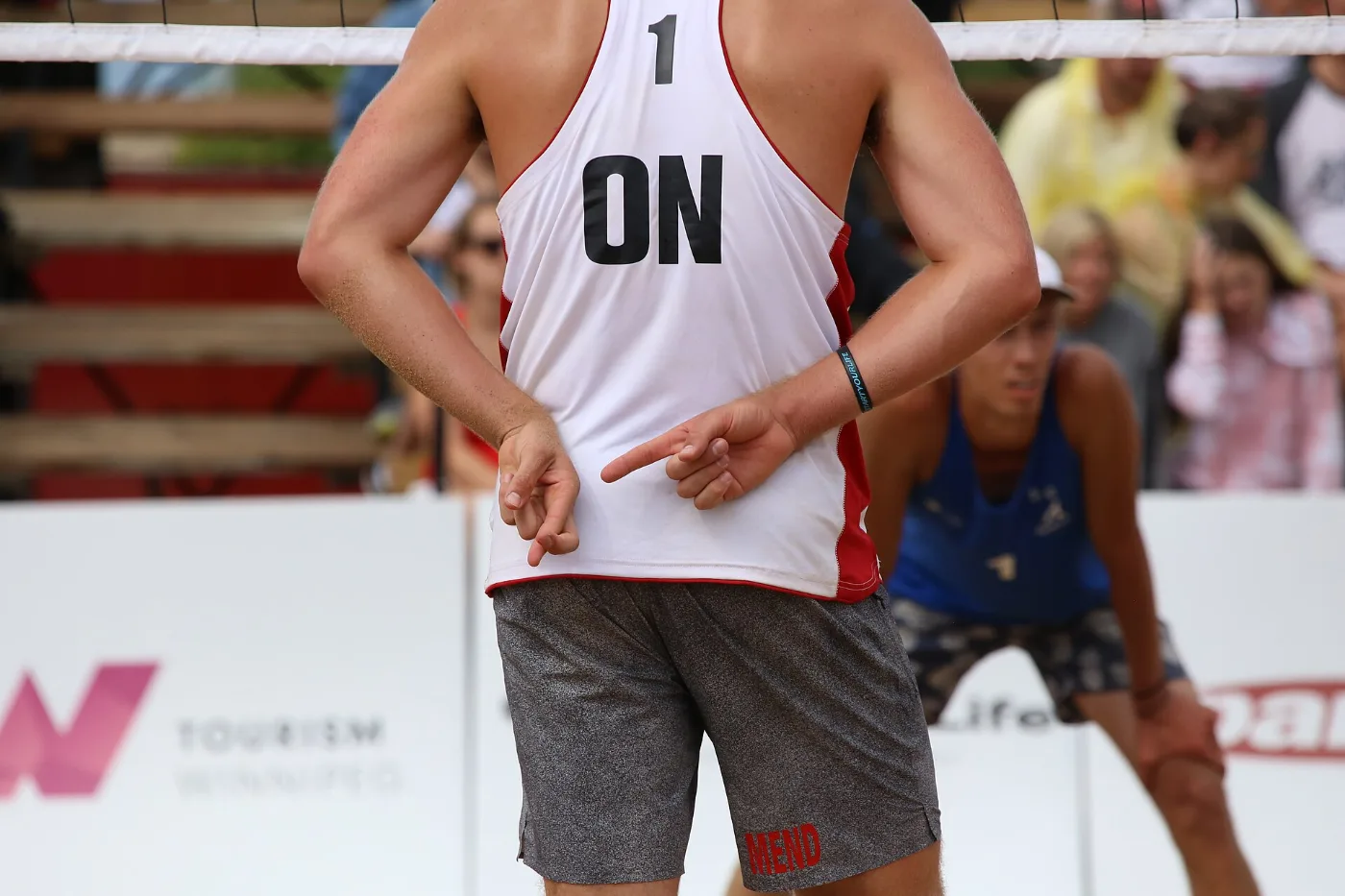
- Calling your own faults is normal. Recreational tournaments usually have no referees. Net touches and crossings are called by the players – including your own. Do that and your reputation is made immediately.
- When in doubt, replay. If the teams disagree, the point is replayed. Arguing over two centimetres costs more time than the point is worth.
- Switch sides every seven points. In sets to 21 you change at every multiple of seven. Nobody remembers this on their first tournament day – until the opponent mentions it.
- Shake hands afterwards. Even after an 8–21. Especially after an 8–21.
- Do not disappear. Leaving after the group stage because it went badly sabotages everyone else’s schedule.
How to prepare sensibly in four weeks
Preparing for a recreational tournament is less about technique than about durability. Playing eight sets in a day, you do not lose skill – you lose energy.
Weeks 1–2: play twice a week, once of those deliberately long – three sets back to back rather than casual rallying.
Week 3: serve while tired. After playing, hit another 30 serves. That is exactly the situation in your fifth match.
Week 4: agree your calls. Who takes the middle? Who goes to the block? What do you shout? A team with three agreed calls instantly looks twice as well drilled.
Common questions
Do I need a fixed partner?
For registration, yes. If you have none, open tournaments with random draws or player groups will nearly always find you one.
What does a tournament day cost in total?
Entry €15–30 per team plus food. Realistically €25–40 per person for a full day of sport.
What if we lose every match?
You will still have played six sets, met three opponents and learned what to work on. That is precisely what a first tournament is for.
Tournament-ready in one weekend
On day two of our camps we run an internal tournament – same procedures, same scoring, just without entry fees or strangers. The easiest possible trial run.
Every tournament date in Berlin at a glance
We collect the dates of every Berlin organiser in one place – fun tournaments, C-Cups and ranking events, grouped by weekend, with free places and a direct registration link.